Overall Summary
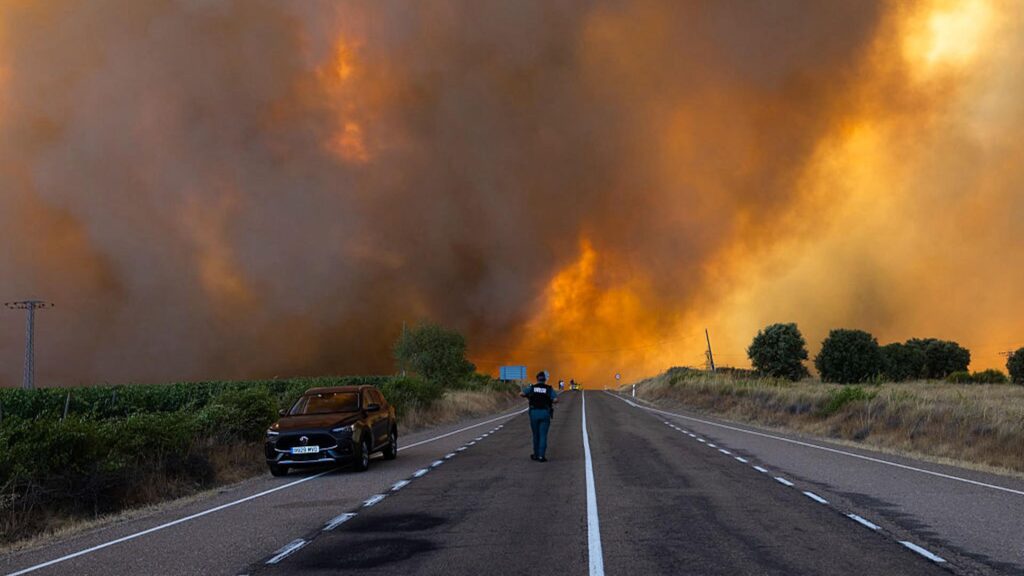
In late July 2026, severe wildfires across Spain and France forced emergency closures along crucial road and rail links surrounding Madrid, Bordeaux, and wider areas of southern France. Major logistics providers, including DHL Freight and Kühne+Nagel, issued client warnings regarding significant delays in road and rail transport.
While primary transit arteries reopened relatively quickly, the broader operational impact continues to ripple across international supply networks. Analysis by risk management firm Sphera reveals that over 30 fire-related supplier delivery failures occurred across France, Spain, Portugal, and Greece over a recent three-year window. The immediate restoration of transit corridors obscures lingering bottlenecks in component availability, sub-tier production, and logistics network synchronisation.
Analysis: The Mechanics of Delayed Disruption
The Sub-Tier Visibility Void
Disruption routinely shifts from primary transport routes to deeply embedded manufacturing operations. While organisations maintain direct oversight of Tier-1 suppliers, visibility rapidly degrades at Tier-2 and Tier-3 levels. A localised wildfire near an industrial cluster, such as the aerospace and high-tech manufacturing base around Bordeaux, frequently forces the evacuation or shutdown of specialised component makers or packaging facilities.
Tier-1 plants often continue assembly using existing safety stock during the active fire event. The true operational breakdown occurs days or weeks later when specific, highly specialised components run out. Replacing these specialised inputs at short notice presents severe challenges, causing delayed production halts in sectors such as aerospace, electronics, medical technology, and mechanical engineering.
Network Misalignment and Cascading Friction
Logistics networks operate on strict time windows. A delay on a feeder route causes cargo to miss scheduled hub cut-offs in groupage and express networks, turning a brief highway closure into a multi-day delivery lag.
Similar friction occurs in ocean and air freight. Freight hubs and sea terminals around key commercial nodes like Marseille, Lyon, and Fos-sur-Mer may remain fully operational, yet cargo misses booked vessel sailings due to inland pre-carriage delays. Re-routing freight around impacted zones incurs compounding expenditures:
-
Expanded mileage driving up fuel consumption and driver hours.
-
Premium freight surcharges for emergency air or express transport.
-
Contractual penalties resulting from missed assembly deadlines.
-
Protracted dwell times and extra storage fees at distribution nodes.
Future Outlook: Managing the Long Tail of Climate Events
Climate volatility ensures that localised acute weather events will increasingly cause chronic operational drag. Regional fires disrupt local workforce availability, displace transport fleets, and create massive backlogs at regional transhipment hubs. Supply chain recovery depends directly on sub-tier restart timelines and regional transport capacity beyond the physical condition of the highway network.
Structural Comparison: Frameworks for Managing Disruption
Traditional Linear Approach
-
Evaluates risk primarily through physical transport corridor status and primary carrier updates.
-
Assumes operational normalisation coincides directly with the reopening of roads and ports.
-
Operates low-inventory buffers for specialised, single-sourced sub-components.
-
Monitors direct Tier-1 supplier locations while ignoring upstream material dependencies.
Advanced Resilient Approach
-
Maps and tracks Tier-2 and Tier-3 supplier dependencies down to specific regional industrial clusters.
-
Establishes dynamic inventory buffers calibrated to sub-tier restart timelines instead of static transit times.
-
Decouples critical manufacturing dependencies from geographically concentrated climate-risk zones.
-
Embeds multi-tier predictive disruption alerts directly into central resource planning software.
Actionable Executive Guidance
-
Extend Mapping Beyond Tier 1: Audit supply chains to identify sub-tier suppliers located within high-risk climate corridors in southern Europe and other vulnerable regions.
-
Buffer Specialised Inputs: Re-evaluate lean inventory targets for custom components that lack immediate secondary sources.
-
Redesign Freight Contracts: Incorporate explicit contingency clauses for emergency re-routing and buffer time slots to mitigate downstream missed connections.
Source References
-
Kol, S. (2026) ‘Wildfires in southern Europe: why wildfire supply chain disruption continues after roads reopen’, Trans.INFO, 4 August.